IT Support for Manufacturing Businesses: What to Look For
The IT challenges manufacturers face, from downtime and legacy machine PCs to factory Wi-Fi, and what good IT support for manufact...
Read more →
Cat6 or Cat6a for your office cabling? Speed, distance, PoE, cost and which to choose for desks, Wi-Fi access points and CCTV.
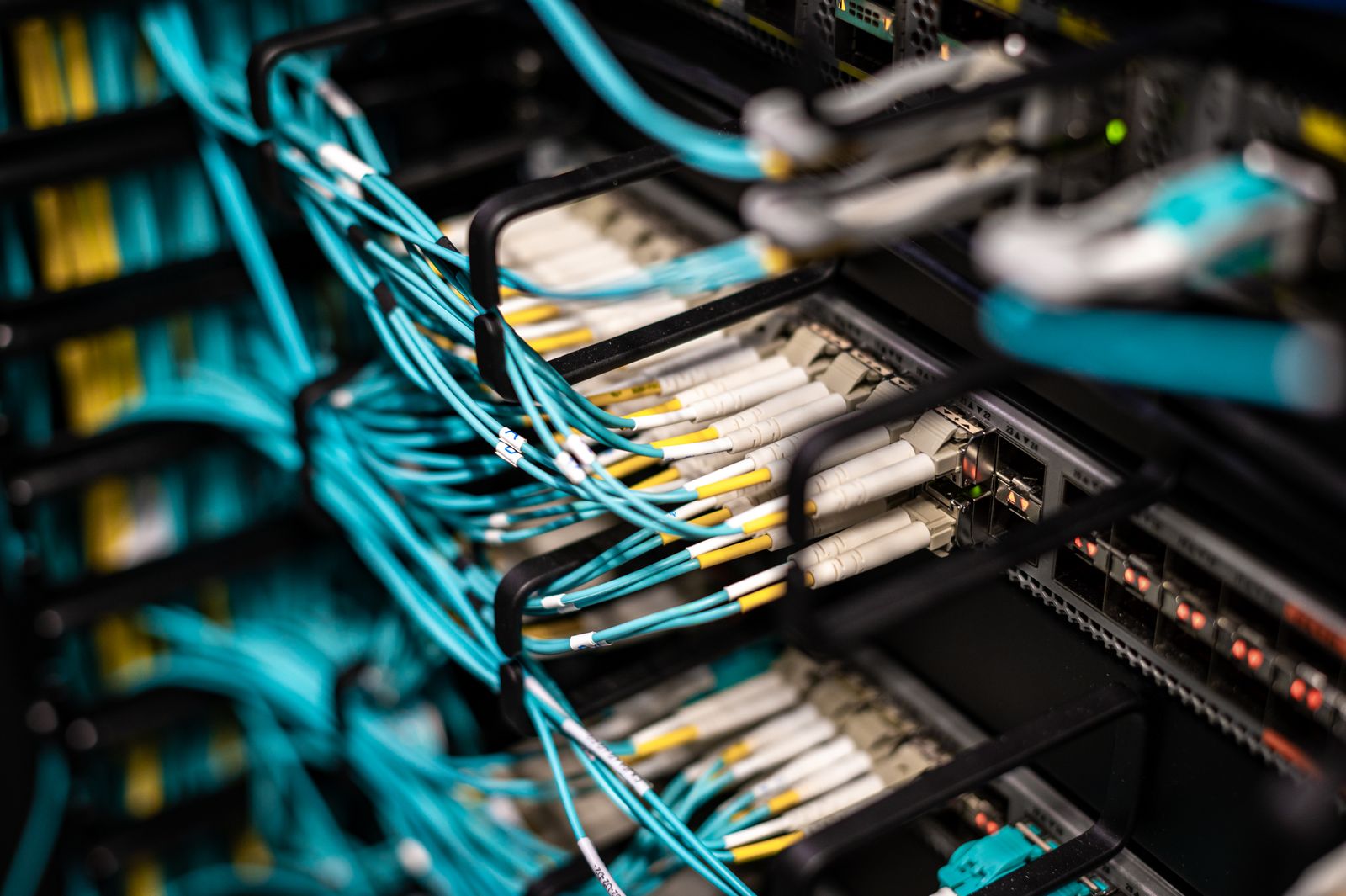
If you’re fitting out a new office, moving premises or replacing old cabling, one of the first questions is which network cable to use. For most businesses today the choice is between Cat6 and Cat6a. Both look similar, but they differ in speed, distance, cost and how future-proof they are. Here’s how to choose.
| Cat6 | Cat6a | |
|---|---|---|
| Frequency | Up to 250 MHz | Up to 500 MHz |
| 1 Gbps | Up to 100 m | Up to 100 m |
| 10 Gbps | Only over short runs (up to around 55 m in good conditions) | Up to 100 m |
| Interference resistance | Good | Better, with less crosstalk between cables |
| PoE performance | Good | Better heat handling for high-power PoE |
| Cable size | Thinner, easier to route | Thicker and stiffer, needs more space |
| Cost | Lower | Higher cable and installation cost |
Modern Wi-Fi 6, 6E and Wi-Fi 7 access points can carry more than 1 gigabit of traffic, and many now have 2.5 or 5 gigabit network ports. Cat6a supports these speeds over full-length runs and gives headroom for the next generation. Industry guidance increasingly recommends Cat6a for access point cabling.
Access points, CCTV cameras, phones, door entry and even lighting are now powered over the network cable. Higher-power PoE generates heat in cable bundles, and Cat6a handles this better.
Cabling is usually expected to last fifteen years or more, through several generations of computers and network equipment. The cost difference between Cat6 and Cat6a is small compared with the labour, and far smaller than re-cabling later.
Cat5e supports 1 gigabit and is still found in many older buildings. It works for basic desk connections, but isn’t a good choice for new installations. Cat7 isn’t a recognised standard for typical structured cabling in the UK and uses different connectors, so Cat6a is usually the better choice. Cat8 is designed for short links in data centres, not office cabling.
A cabling system is only as good as its weakest part. Make sure:
E-Consulting designs and installs structured cabling for offices, warehouses and industrial units, including data points, Wi-Fi access points, CCTV cabling and comms cabinets. We test and label every point. Read about our networking and Wi-Fi services and what a network consultant does, or book a free survey on 0121 233 0200.
For new installations, usually yes. The difference in total project cost is modest, and Cat6a supports faster Wi-Fi and PoE devices for many years.
They work together, but a link only performs to the standard of its lowest-rated part. For best results, use matching components throughout each run.
Not on its own. Your internet speed depends on your broadband connection. Cat6a improves speeds inside your network, such as between access points, switches and servers.
Keep reading



Put the advice into practice
Discuss your business systems, support needs and next IT project with our Birmingham team.