
Cat6 vs Cat6a: Which Network Cable Should Your Office Use?
Cat6 or Cat6a for your office cabling? Speed, distance, PoE, cost and which to choose for desks, Wi-Fi access points and CCTV.
...
Read more →
What business CCTV installation costs in the UK in 2026, what drives the price, hidden extras and how to compare CCTV quotes.
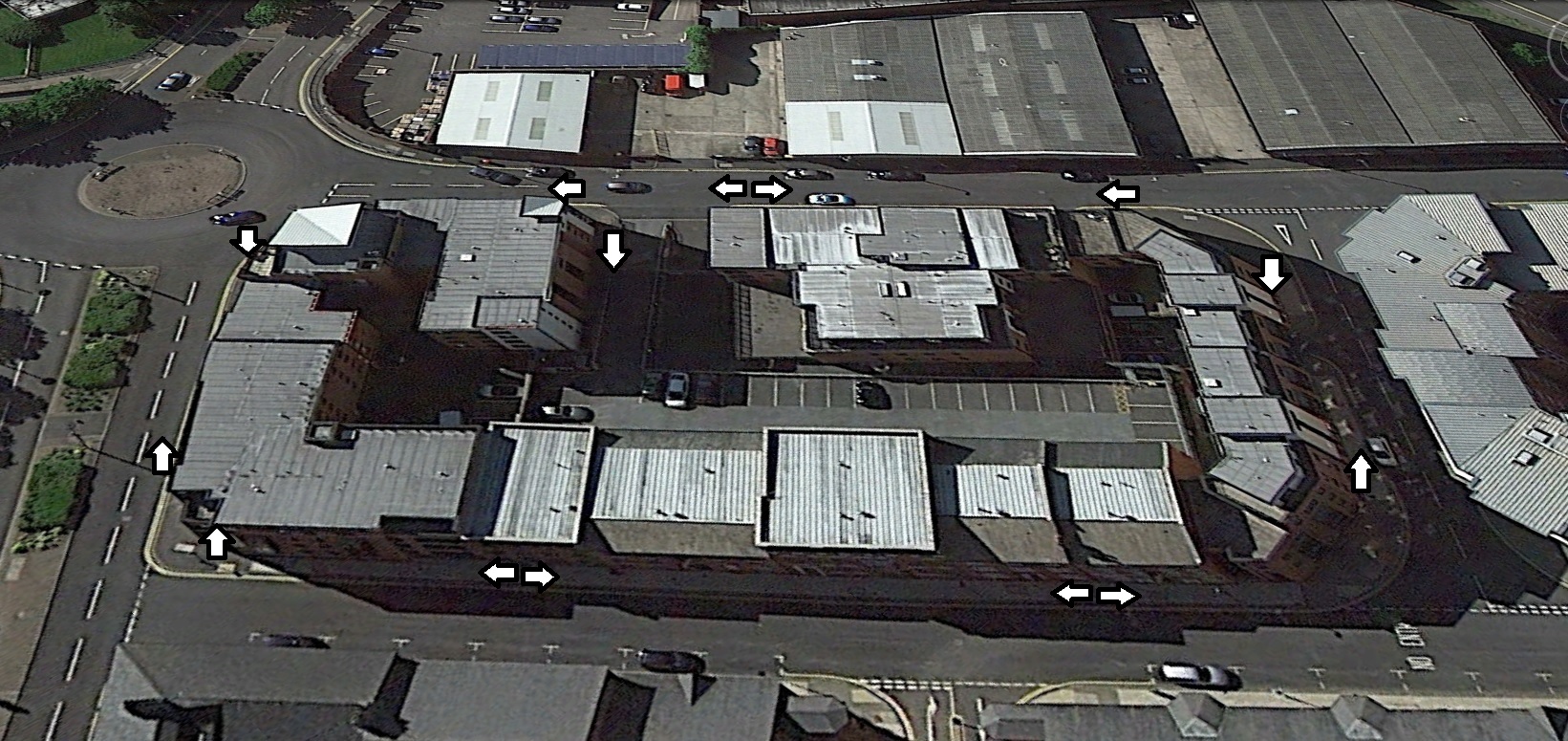
CCTV is one of the most useful security investments a business can make, but prices vary enormously. You’ll see adverts for four-camera kits at a few hundred pounds and quotes for business systems running into thousands. This guide explains what business CCTV installation typically costs in the UK in 2026, what actually drives the price, and how to compare quotes so you get a system that records what you need when you need it.
Published price guides from UK installers give a rough picture of the market. Treat these as ballpark figures, because every site is different:
For comparison, a basic four-camera system for a house is often quoted at well under £2,000. Business systems cost more because they usually cover larger areas and longer cable runs, need better cameras for car parks and entrances, store more footage, and have to be set up so several people can access recordings securely.
The only way to get an accurate figure is a site survey. Any installer quoting a fixed price without seeing your premises is either guessing or planning to fit the same kit regardless of your building.
Cameras are the obvious cost, but the type matters as much as the number. A turret camera covering an office corridor is inexpensive; a high-resolution camera that can capture faces at a doorway or read number plates at a car park entrance costs more. Good low-light performance is worth paying for on any camera covering outdoor or dimly lit areas. Most professional installations now use IP (network) cameras, which give sharper images and are easier to expand than older analogue systems.
Labour is often the largest part of the bill. Each camera needs a cable run back to the recorder, usually Cat6 cabling that carries both power and video (PoE). Short runs through an accessible ceiling are quick; long runs across a warehouse, through brick walls, or between buildings take much longer and may need fibre. Working at height on high walls or in warehouses can also add access equipment costs.
The network video recorder (NVR) stores your footage. The more cameras you have, the higher their resolution and the longer you want to keep recordings, the more storage you need. Thirty days of footage from sixteen high-resolution cameras needs far more disk space than a week from four. Decide how long you genuinely need to keep footage before you get quotes, because it directly affects the price, and data protection rules expect you not to keep it longer than necessary.
Most businesses want to view cameras from a phone or office PC. Setting this up properly means configuring user accounts, securing the recorder and making sure it isn’t exposed to the internet with default passwords, a common weakness in cheaply installed systems. If cameras will share your business network, the network may need configuring or upgrading too.
A CCTV system needs occasional care: cleaning lenses, checking recordings are working, replacing failed hard drives and applying firmware updates. Many installers offer an annual maintenance plan; published guides suggest a few hundred pounds a year for a small system. It is worth it, because the worst time to discover a camera has stopped recording is after an incident.
If your cameras capture identifiable people, the footage counts as personal data under UK GDPR. The Information Commissioner’s Office expects businesses to have a clear reason for each camera, display signs saying CCTV is in use, avoid recording areas they don’t need to (such as neighbouring properties or the street, where possible), keep footage only as long as necessary and control who can view it. A good installer will design the system with this in mind, using sensible camera angles, privacy masking and retention settings. This is general information rather than legal advice; the ICO’s guidance on video surveillance gives the full picture.
Off-the-shelf kits can work for a small shop or office with simple needs. The savings tend to disappear when cable runs get long, cameras need mounting at height, or the system has to be secured properly on a business network. A poorly placed camera that records a blurred figure at night is no use as evidence, however cheap it was.
E-Consulting designs, installs and supports business CCTV in Birmingham and across the West Midlands. As an IT company, we also handle the data cabling and network your cameras rely on, so one team is responsible for the whole system. We survey your site first and give you a fixed written quote.
To arrange a survey, get in touch or call 0121 233 0200.
Published UK price guides put a small business system of around four to eight cameras at roughly £1,200 to £3,000 installed, depending on camera quality, cable runs and storage. A site survey gives an accurate figure.
Per-camera costs vary widely because labour depends on the cable run to each camera. Professional IP cameras themselves are often relatively inexpensive; the installation, cabling and configuration usually make up most of the cost.
A small system can often be installed in a day. Larger sites with long cable runs, outdoor cameras or several buildings take longer.
You don’t normally need permission to install CCTV on your own business premises, but if it records people you must follow UK GDPR, including displaying signs and handling footage responsibly. Check your lease, as some landlords set rules on external fixings.
Keep reading


Put the advice into practice
Discuss your business systems, support needs and next IT project with our Birmingham team.